For hundreds of years, artists have followed a familiar path to create bronze sculpture. An artist sketches the idea, creates a small sculpture maquette, then enlarges it for the final piece.
Today, digital tools offer another path. At Bollinger Atelier, our digital department can take an artist’s drawing or photograph and develop it into a three-dimensional sculpture. This allows the artist to move from a 2D concept toward a finished bronze without first building a traditional maquette.
But can technology capture the character and intention behind an artist’s original work? We wanted to test that question ourselves.
Starting with a Drawing
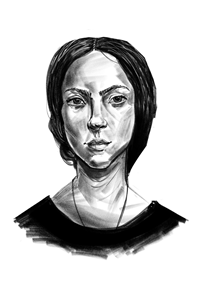
One of our own artisans created a hand-drawn portrait for this experiment.
Starting with an original drawing gave us a clear reference. As the sculpture developed, we compared the digital work to the drawing and asked a simple question: Does this still feel like the original?
That question guided the entire process.
Creating the Initial Digital Model
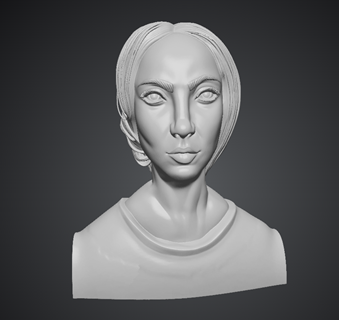
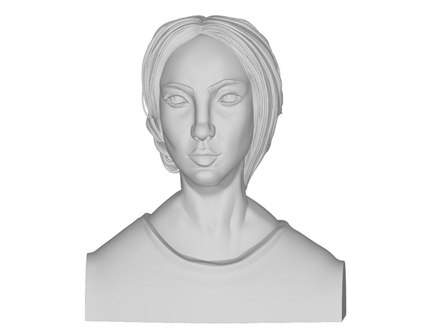
Our digital artisan, Matt Weber, imported the drawing into specialized software to create an initial three-dimensional interpretation. The software established overall depth and volume, transforming the flat image into a form we could view from every angle.
This initial digital sculpture rendering provided a foundation, but it wouldn’t become the finished sculpture. Like a rough clay block-out, it established the major forms while leaving room for refinement. “The software does an outstanding job with faces and likenesses. Yet It struggles with what it can’t see,” says Matt. “Most sketches we get are one sided, so without references, it will guess what the other side looks like. And it’s a poor guesser. I usually create portrait style images (front, back, side, etc) from the sketch first. This allows me to tune what I want and keep the software from guessing when it’s time to render in 3D.”
Where the Artist’s Hand Still Matters
This is where the human element becomes essential.
Our digital artisan, Matt, took the initial model into digital sculpting software and refined it by hand. He adjusted anatomy and developed the details that give the sculpture its character. Throughout the process, they kept the original drawing in mind. Matt said, “It’s important to read the artist’s style. Sometimes details can get lost in translation, and I try hard to make sure the end result looks like something the sketch artist would have created themselves. There has to be continuity between the sketch and the finished sculpture.”
It became essential that he used his own sculptural experience to interpret what the software could not.
Digital sculpting may use a stylus and screen instead of clay and traditional tools, but the fundamental work remains familiar. Someone must make decisions about proportion, form, expression, and surface. “As sculptors ourselves, we see things the AI does not. Although the software is really good, it usually creates an accurate rendering that looks ‘too perfect’ and manufactured. Most of the style and intent gets lost and needs to be sculpted back in digitally,” said Matt.
The artist also remains part of that process. We can review the digital model together, make revisions, and resolve questions before the sculpture moves into physical production. How extensively is the artist or designer involved? Matt explained, “We will sculpt to the best of our ability and then send the client images for suggestions or approval before printing. We want them to have their fingerprints and input on the final design as well, and not feel like someone else just made it for them.”
From Digital Sculpture to Castable Resin
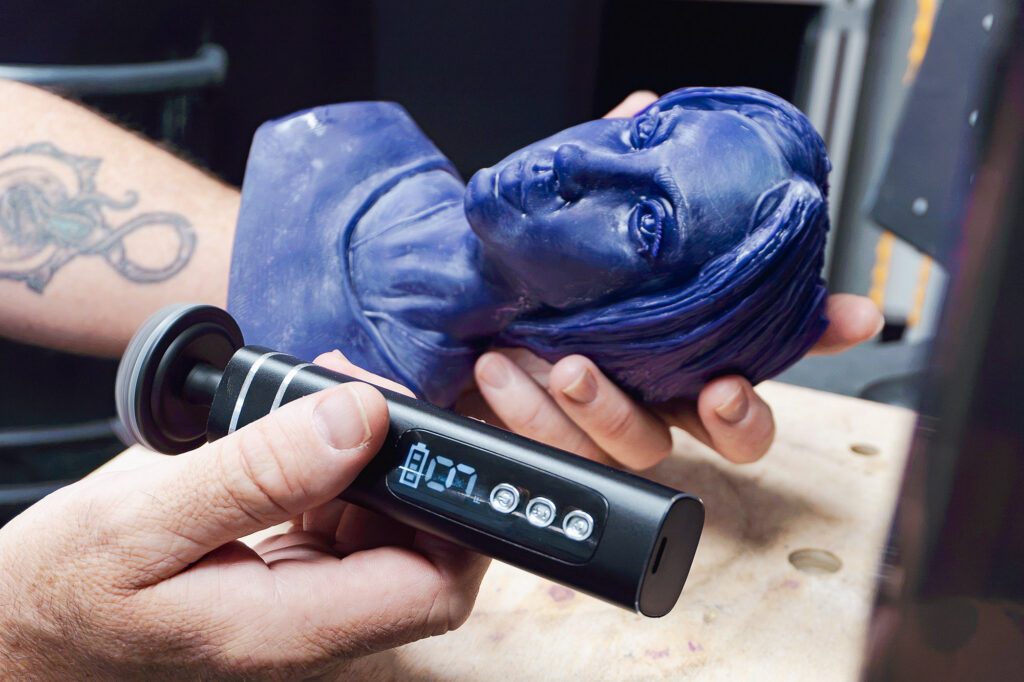
Once the digital sculpture has the desired level of detail, we can send the file directly to our in-house 3D printer. For this project, we printed the sculpture in castable resin, creating a physical model ready for the foundry process.
The resin print creates an important transition point. What began as a drawing now exists as a physical object. We can inspect it from every angle before casting it in bronze.
For an artist, this stage provides one last opportunity to review the work before casting.

From Resin to Bronze Sculpture
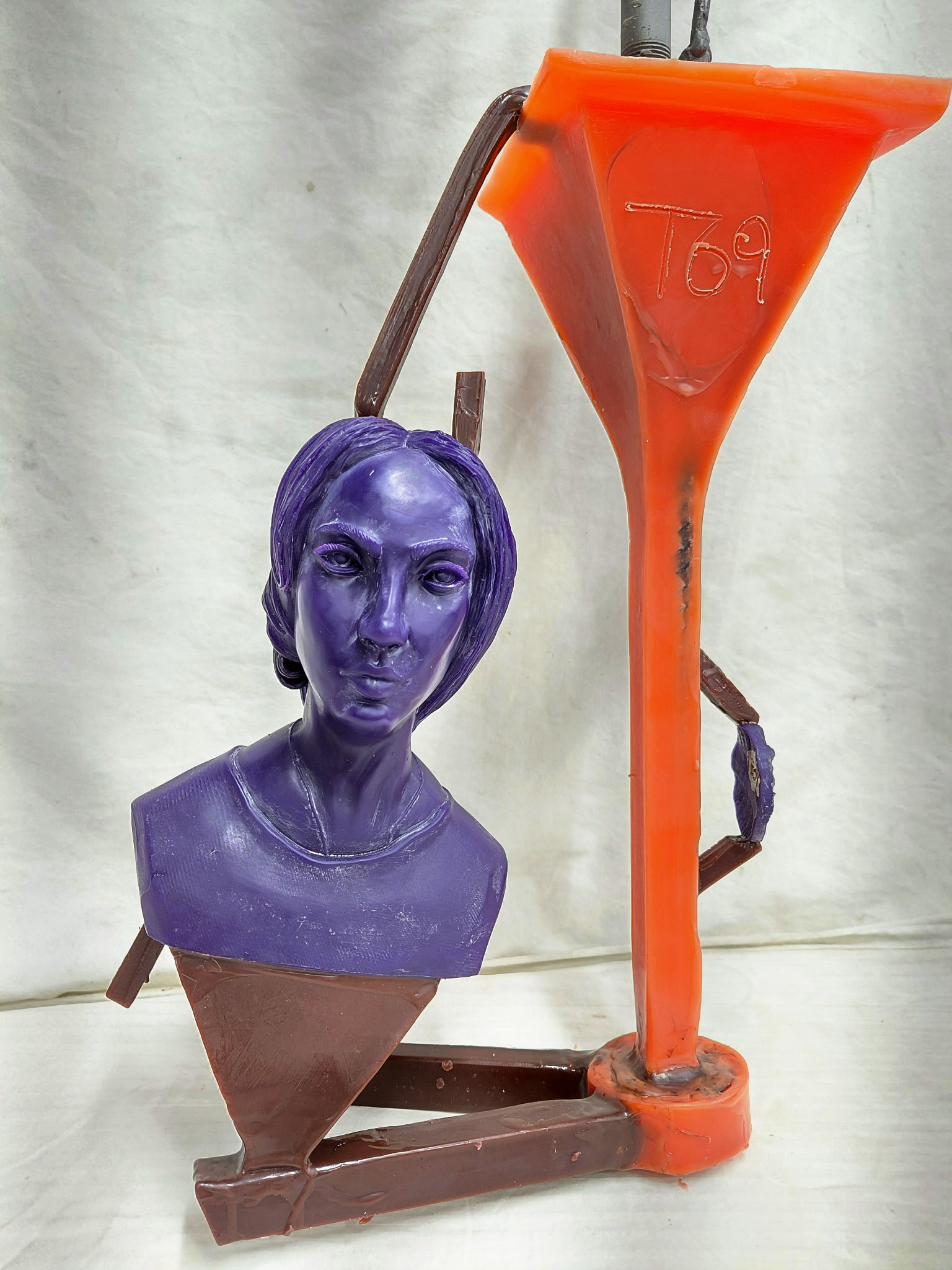
From here, the sculpture follows the same lost wax casting process as any other work produced at Bollinger Atelier.
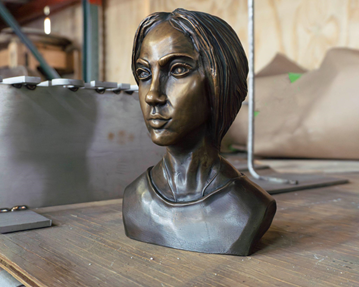
The resin pattern moves through wax gating and ceramic shell, followed by the bronze pour. After casting, our metal artisans devest the sculpture to remove the ceramic shell, and begin the finishing process.
Our chasers refine the cast metal, address any seams or imperfections, and preserve the details created during the digital sculpting stage. The digital workflow may have changed how we created the original form, but the same hands still guide the sculpture through every stage of its transformation into bronze.

Finishing the Sculpture
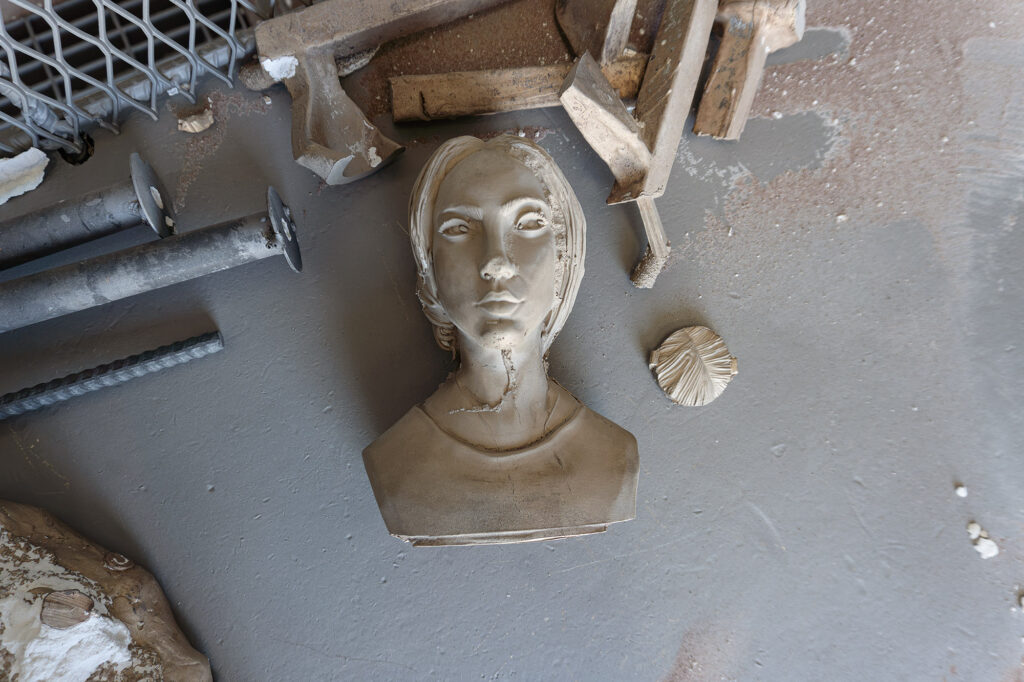
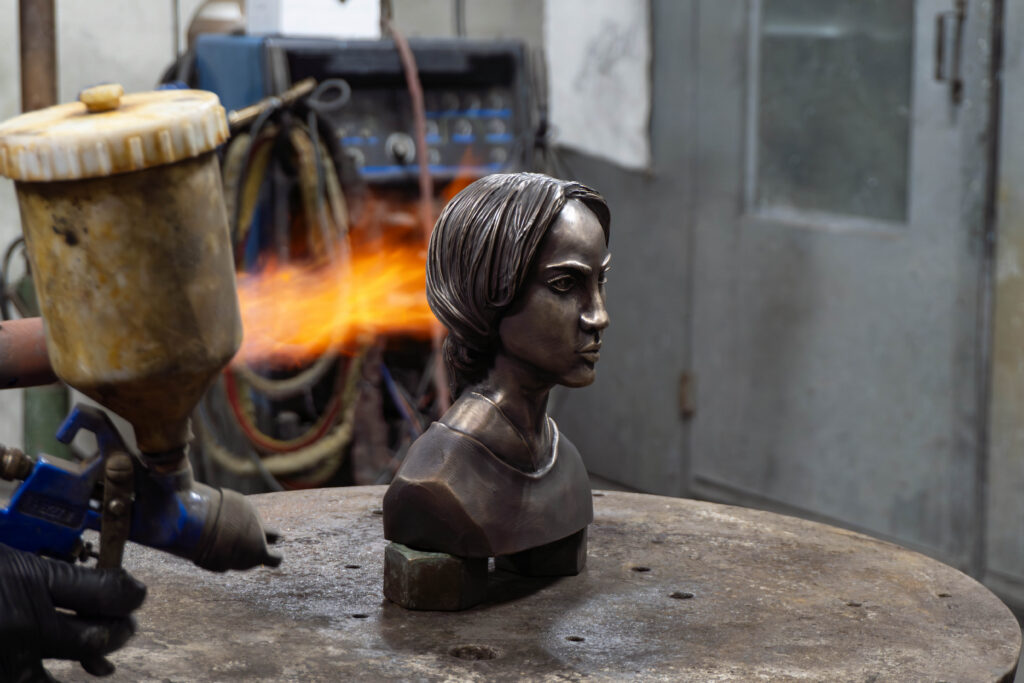
The patina provides the final transformation.
Our patina artisans apply heat and chemicals to develop the desired color and depth. They work carefully across the surface to complement the sculpture’s form. As with any bronze sculpture, the final finish requires observation and judgment rather than a preset formula.
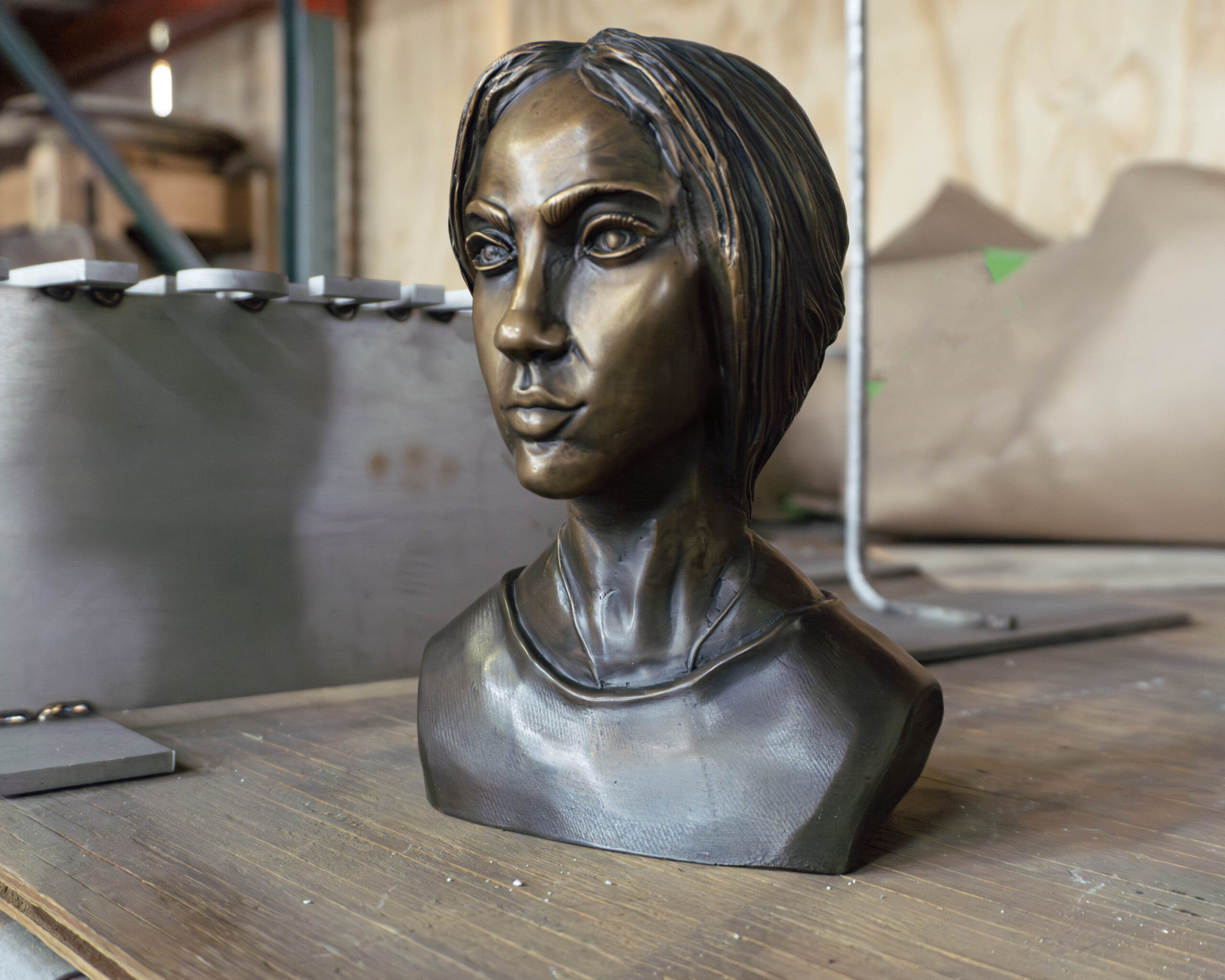
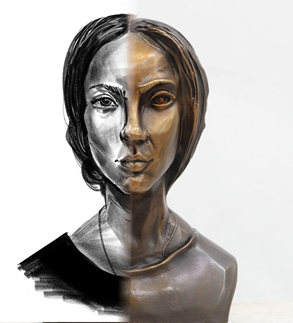
At this point, the original drawing, digital model, resin print, and bronze all tell the same story. Each stage builds on the one before it.

A New Path From Drawing to Sculpture
This process doesn’t ask artists to give up control. Instead, it gives them another way to exercise it.
An artist who prefers hands-on sculpting can use a digital rendering as the foundation for a foam enlargement. From there, they can sculpt with a thin clay surface on top, allowing them to develop the details and textures themselves. An artist who wants to move directly from a drawing to a finished form can work closely with our digital artisan. Together, they can develop a highly detailed model and print it directly in castable resin.
The level of digital refinement changes depending on the path, but the artist remains central to both.
Technology and Craftsmanship
Every generation of sculptors has adopted new tools. Pointing machines, pneumatic tools, CNC milling, 3D scanning, and now digital sculpture rendering have expanded what artists can accomplish.
None of these tools eliminates the need for artistic judgment or skilled craftsmanship. They simply change how artists and artisans approach the work. Matt commented, “I think many people feel the art in this is going away and it’s simply ‘pushing a button.’ It’s not. If you struggle to sculpt in clay, you will struggle digitally as well.”
“Sculptural bronze art techniques have been evolving for hundreds of years, and AI and computers are simply the next evolutionary step. It still takes an artist’s eye and skill to produce something that we can feel good about calling ‘art’. Furthermore, these tools can help produce work faster and save our clients money from traditional techniques. For example, in many cases we skip the mold process, and the ‘mold’ is now a digital file that can be reproduced at any time.”
At Bollinger Atelier, we see digital technology as an extension of the artist’s toolkit. Our software can help translate a drawing into three dimensions. Our digital artisans, however, provide the experience and judgment that turn that starting point into your work of art.